
Segmenting and Predicting Musical Phrase Structure Exploits Neural Gain Modulation and Phase Precession
EEG helps reveal how listeners group a flowing melody into phrases and anticipate their boundaries.
Electroencephalography
EEG uses a cap of small sensors to record electrical activity at the scalp. It helps us understand when the brain notices a change, anticipates a beat, or groups sounds into a musical phrase.
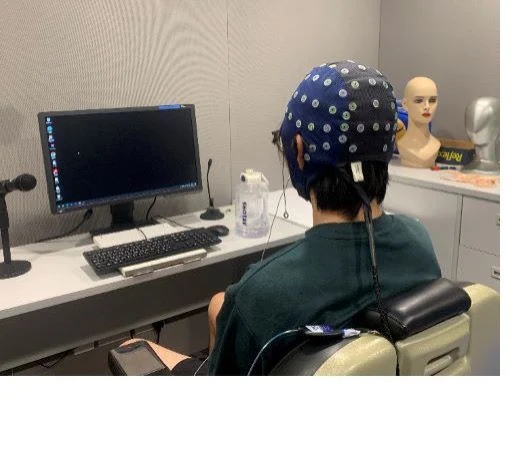
An EEG cap holds small sensors against the scalp. They detect tiny voltage changes that reflect the combined activity of many brain cells. We record these signals while someone listens to music, hears a sequence of sounds, or makes a decision. The sensors record activity; they do not send electricity into the brain.
When do we notice a change? How do we anticipate the next beat or the end of a musical phrase? EEG follows rapid changes in activity, helping us connect what someone hears or does with what happens in the brain at that moment.
EEG helps reveal how listeners group a flowing melody into phrases and anticipate their boundaries.