Methods

Neuroimaging, Behavior, and Computational Modeling

We combine brain recordings, behavioral experiments, and computer models to understand how people perceive, learn, and act. MEG, EEG, and intracranial EEG measure brain activity; psychophysics and online studies measure what people perceive and how they respond. Computational models help us test possible explanations for these patterns.

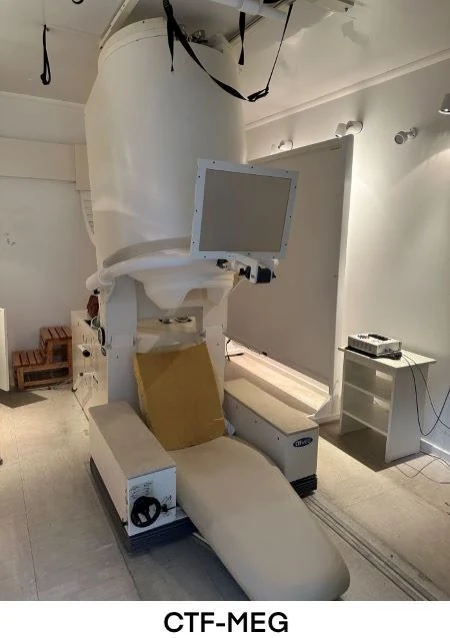
CTF MEG scanner with a helmet-shaped sensor above a reclining chair.
A MEG scanner records the tiny magnetic fields produced by brain activity.
01 / Brain signalsMEGMagnetoencephalographyMEG measures the tiny magnetic fields produced by brain activity, using sensors around the head. It lets us follow how the brain responds to speech, music, and rhythm from one moment to the next.Explore this methodClose introduction

How it works

When brain cells communicate, their electrical activity produces tiny magnetic fields. MEG detects these fields with very sensitive sensors arranged around the head. A person sits or lies beneath a helmet-shaped scanner while listening to sounds or doing a task. The sensors record activity without entering the body.

What it helps us ask

How quickly does the brain respond to a sound? Does it follow a fast rhythm and a slow rhythm at the same time? MEG can follow changes from millisecond to millisecond, helping us study how the brain organizes speech, music, and other sounds as they unfold.

See it in our work

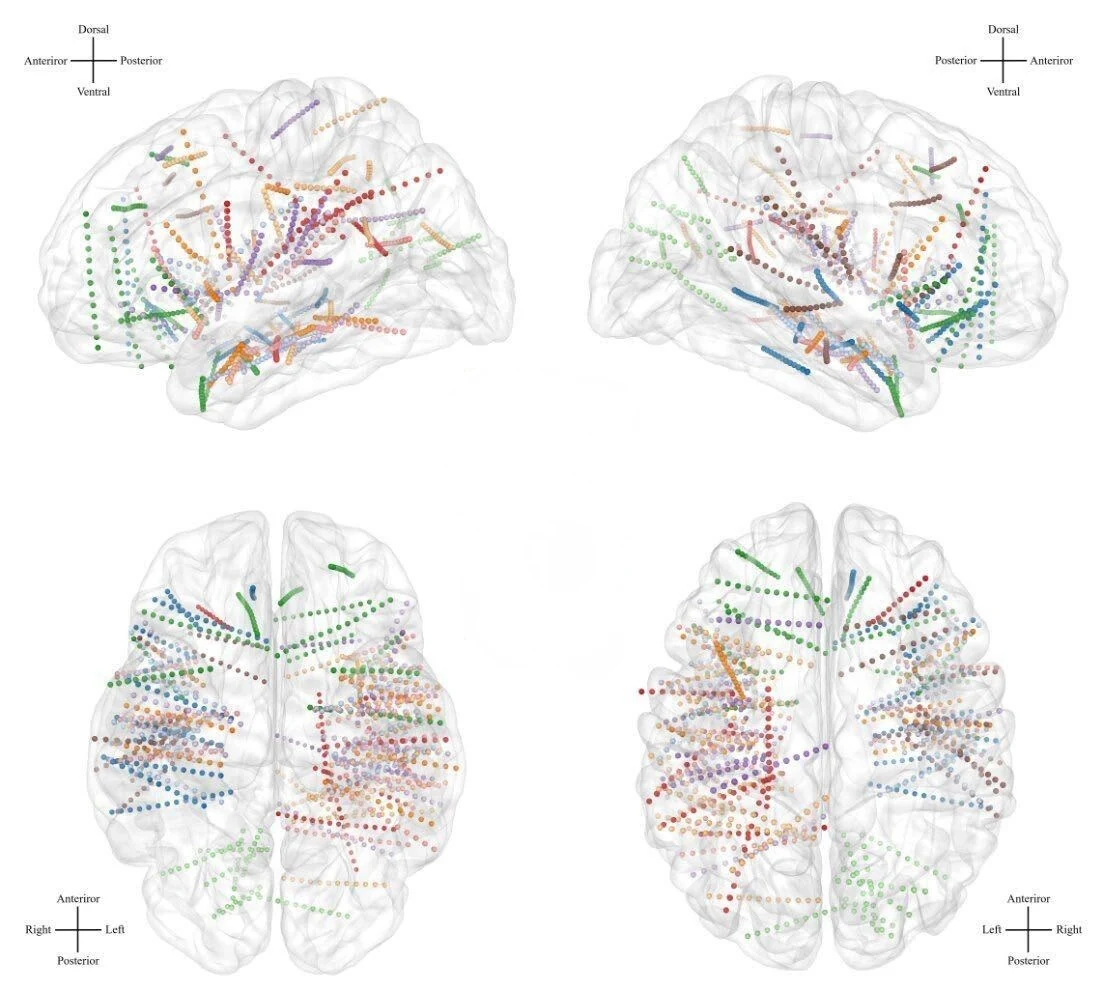
Brain reconstructions showing colored intracranial electrode locations from several viewpoints.
Electrode locations shown on reconstructions of the brain. This is an anatomical visualization.
02 / Brain signalsIntracranial EEGiEEG · Recordings close to the sourceIntracranial EEG records electrical activity with electrodes placed on or within the brain for medical care. Research with these recordings gives us a close view of how particular brain areas process sounds and other events.Explore this methodClose introduction

How it works

Intracranial EEG uses small electrodes on the brain’s surface or within brain tissue to record electrical activity close to its source. These electrodes are placed for medical care, for example to help locate epileptic seizures. With consent and clinical collaboration, patients can also take part in research while the electrodes are in place.

What it helps us ask

How do particular brain areas respond to sound? What changes when a person is awake or under anesthesia? These recordings give us a detailed view of the areas near the electrodes. They sample selected locations, determined by clinical needs, rather than the whole brain.

See it in our work

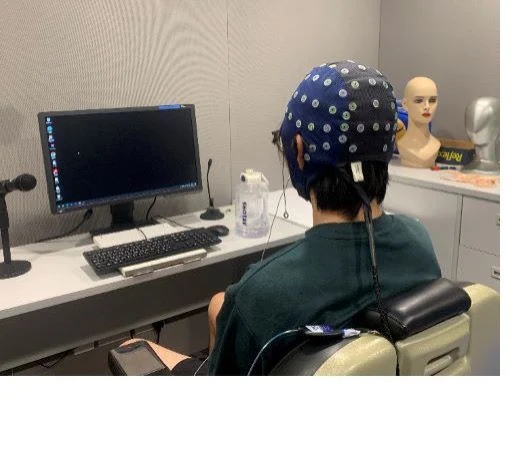
A person seen from behind wearing an EEG cap in front of a computer.
An EEG cap places sensors on the scalp while a person takes part in a task.
03 / Brain signalsEEGElectroencephalographyEEG uses a cap of small sensors to record electrical activity at the scalp. It helps us understand when the brain notices a change, anticipates a beat, or groups sounds into a musical phrase.Explore this methodClose introduction

How it works

An EEG cap holds small sensors against the scalp. They detect tiny voltage changes that reflect the combined activity of many brain cells. We record these signals while someone listens to music, hears a sequence of sounds, or makes a decision. The sensors record activity; they do not send electricity into the brain.

What it helps us ask

When do we notice a change? How do we anticipate the next beat or the end of a musical phrase? EEG follows rapid changes in activity, helping us connect what someone hears or does with what happens in the brain at that moment.

See it in our work

Wired headphones and an audio adapter beside a laptop on a desk.
Headphones and a computer can present carefully controlled sounds in a listening task. Illustrative photograph. Wutthichai Charoenburi / Pexels
04 / Perception and behaviorPsychophysicsConnecting a stimulus to an experiencePsychophysics connects a change in a sound or image with what a person experiences. By carefully varying a stimulus and measuring responses, we discover what people notice and which cues guide their perception.Explore this methodClose introduction

How it works

Psychophysics connects physical changes in the world with what a person experiences. A participant might decide whether two sounds are the same, which event came first, or whether a faint tone was present. We carefully vary features such as loudness, timing, or rhythm and measure choices and response times.

What it helps us ask

How small a change can someone notice? Which parts of a sound make it seem like speech or music? By controlling what changes between trials, we can discover which cues people use and where the limits of perception lie.

See it in our work

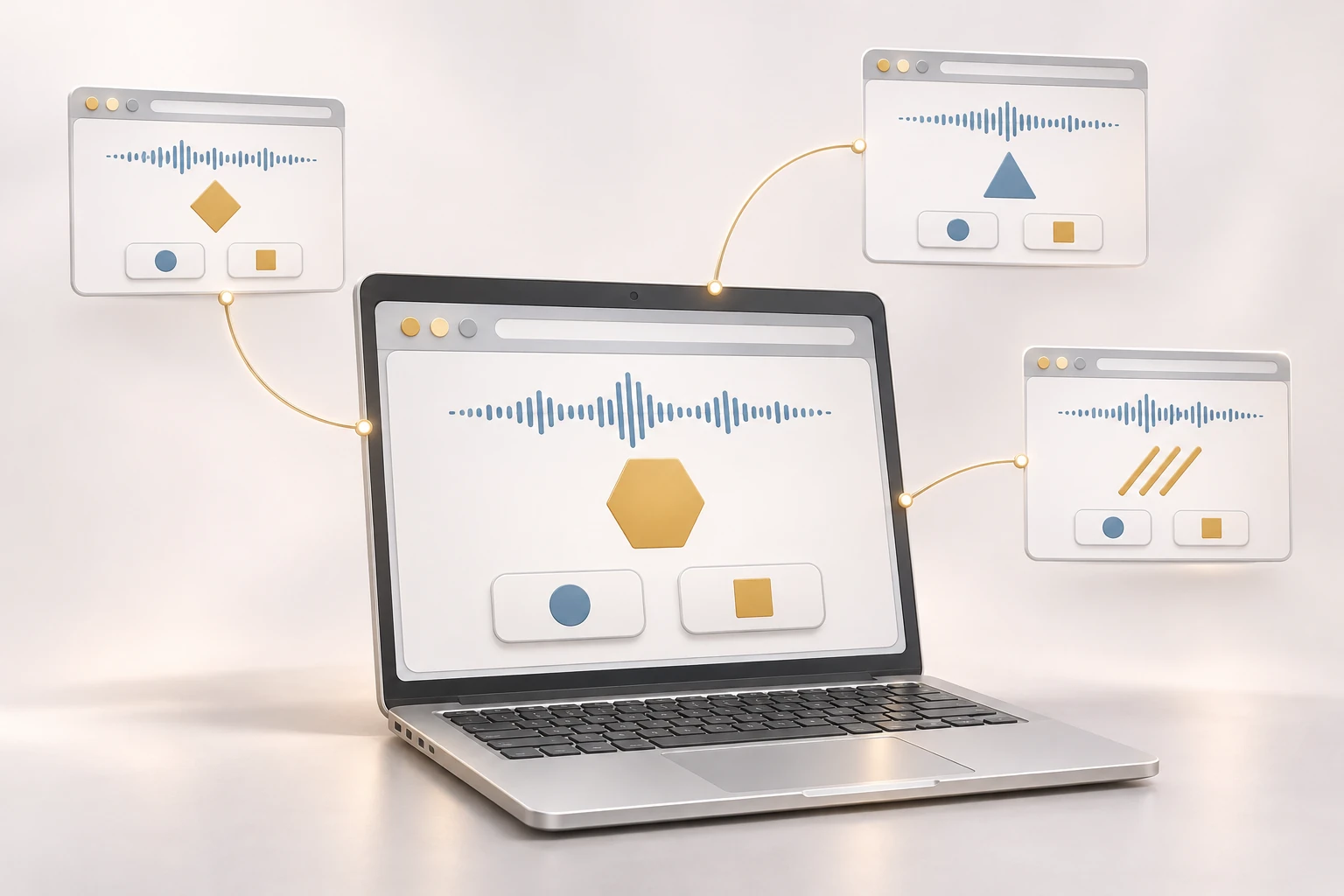
A laptop and connected browser windows showing sound waveforms, visual stimuli, and response buttons, with no people.
A browser-based experiment, connected across devices. AI-generated concept illustration.
05 / Perception and behaviorOnline studiesTaking experiments beyond the labOnline studies bring listening tasks and questionnaires to a participant’s own computer through a web browser. They help us reach people beyond a single testing room and compare responses across different backgrounds.Explore this methodClose introduction

How it works

An online study takes place in a web browser. Participants may listen through headphones, compare sounds, make choices, or answer questions. The study records their responses so we can compare patterns across many people. Instructions and checks, such as a headphone check for a listening task, help us assess the responses.

What it helps us ask

How do people with different backgrounds hear a sound or form an impression of a speaker? Online studies help us reach people beyond a single testing room. Because devices and surroundings vary, we choose tasks that suit this setting and check the quality of the responses.

See it in our work

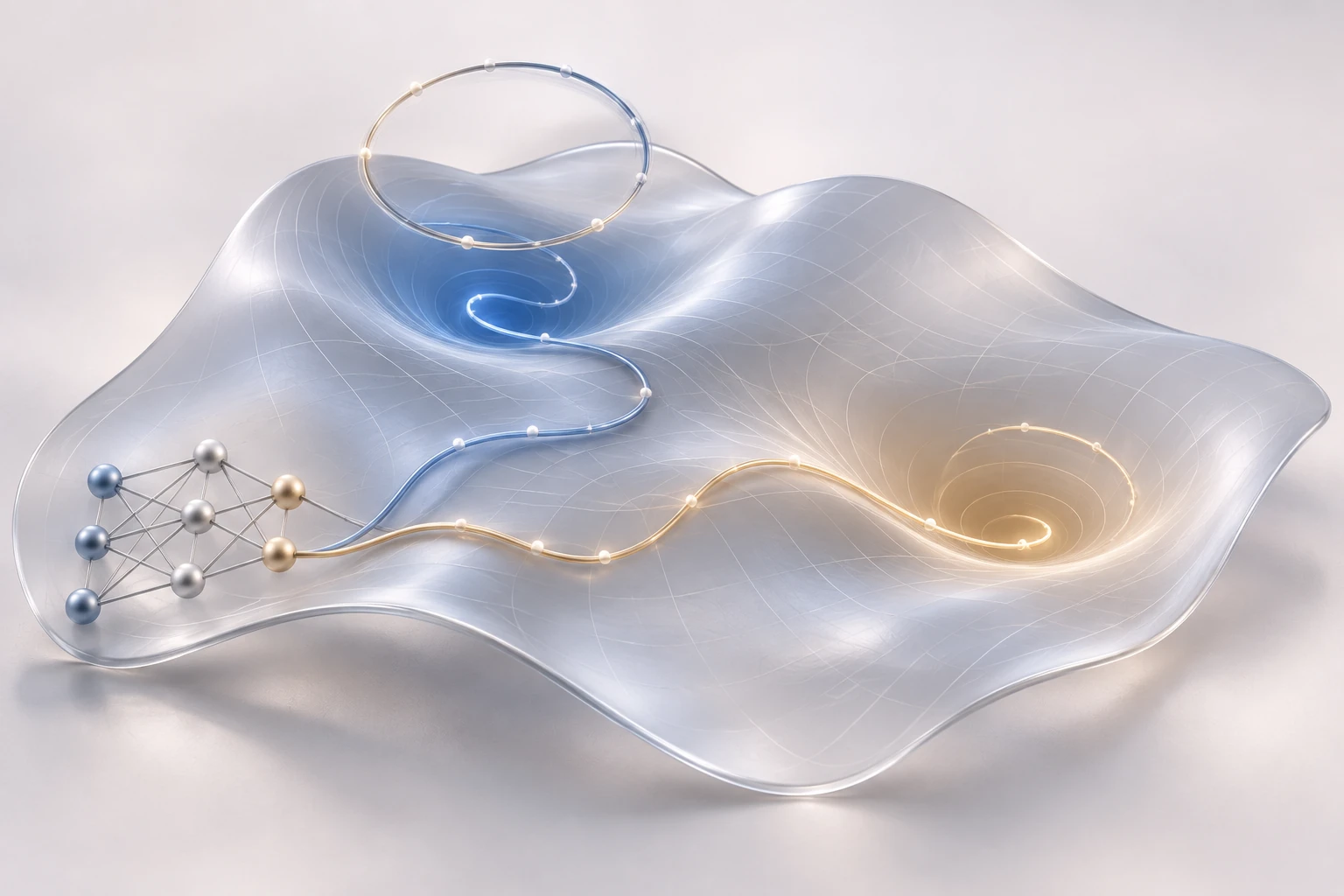
A conceptual landscape with looping trajectories, two stable-state basins, and a small network of connected nodes.
Trajectories, stable states, and networks represent different ways to model change. AI-generated concept illustration.
06 / Models and predictionsComputational methodsDynamical systems, statistical models & neural networksComputational methods turn ideas about the mind into models we can test. Dynamical systems, statistical models, and neural networks help us explore how behavior and brain activity change over time.Explore this methodClose introduction

How it works

A computer model expresses an idea as a set of rules. We can run it, change its assumptions, and compare its predictions with observations. Statistical models help us describe patterns and uncertainty in measurements.

A dynamical system describes how something changes from one moment to the next: how activity settles into a stable state, repeats in a rhythm, or shifts after new information arrives. Neural networks offer another way to model learning, by adjusting connections between simple computing units. These approaches can also work together.

What it helps us ask

How might feedback stabilize a movement? What allows us to anticipate an important moment, or adapt when a rhythm changes? We compare model predictions with behavior and brain recordings, then change parts of a model to see what matters. A successful match gives us an explanation to test further; it does not mean the model works exactly like a brain.

See it in our work