
Auditory tracking magnitude, temporal alignment, and anatomical distribution during wakefulness and propofol-based anesthesia
Direct brain recordings show how responses to rhythmic sounds change between wakefulness and anesthesia.
iEEG · Recordings close to the source
Intracranial EEG records electrical activity with electrodes placed on or within the brain for medical care. Research with these recordings gives us a close view of how particular brain areas process sounds and other events.
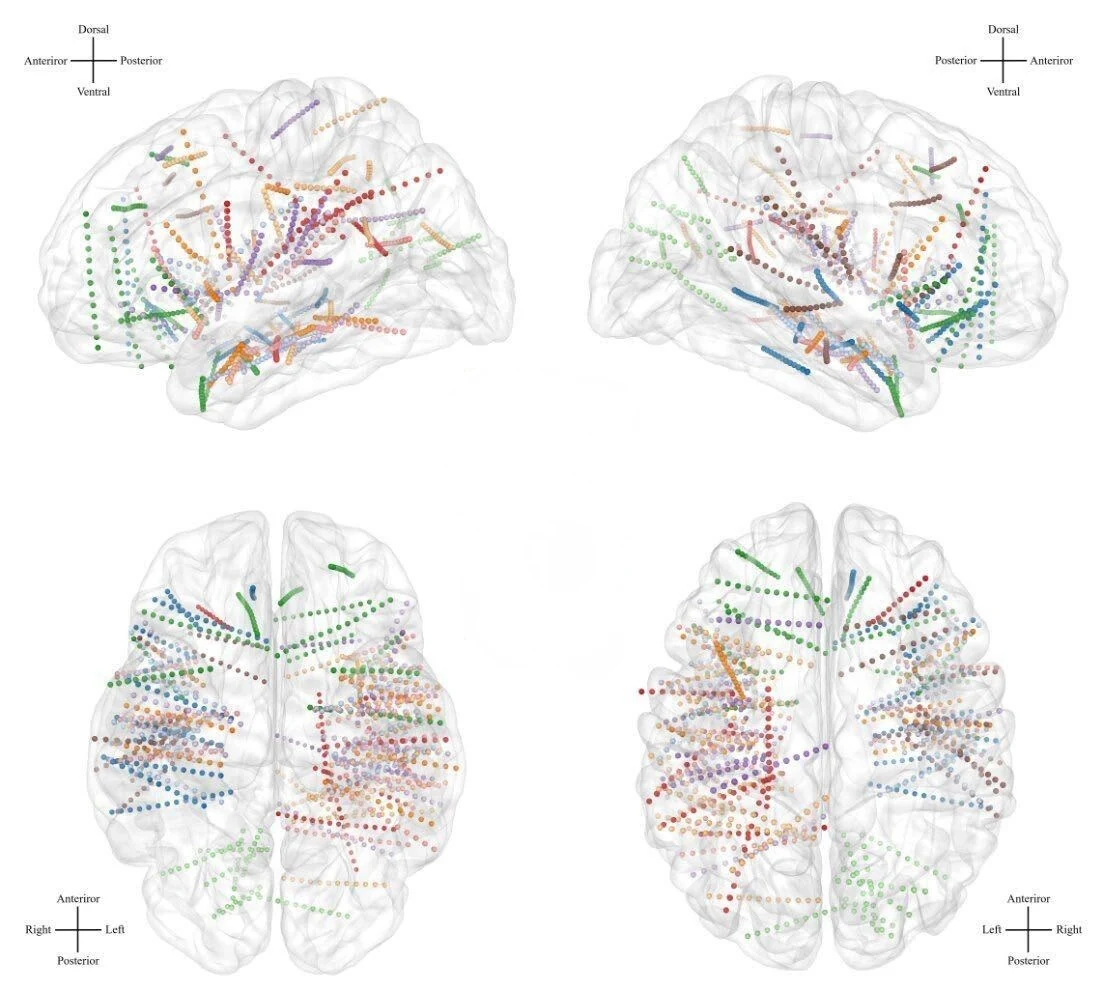
Intracranial EEG uses small electrodes on the brain’s surface or within brain tissue to record electrical activity close to its source. These electrodes are placed for medical care, for example to help locate epileptic seizures. With consent and clinical collaboration, patients can also take part in research while the electrodes are in place.
How do particular brain areas respond to sound? What changes when a person is awake or under anesthesia? These recordings give us a detailed view of the areas near the electrodes. They sample selected locations, determined by clinical needs, rather than the whole brain.
Direct brain recordings show how responses to rhythmic sounds change between wakefulness and anesthesia.