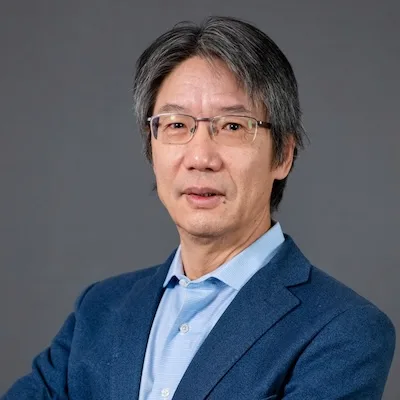
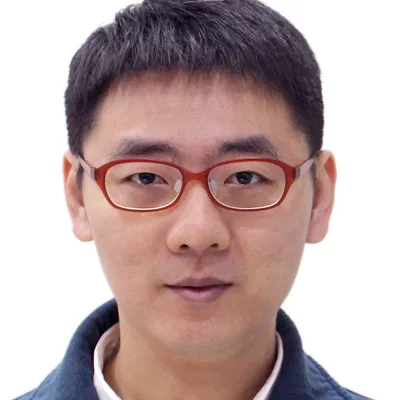
Our lab investigates the algorithms that enable brain-computer interfaces, in particular approaches that can facilitate robust generalization of robotic control.
Looking for: PhD students with a strong math background
14 labs across 7 institutions. Add yours.

Our lab investigates the algorithms that enable brain-computer interfaces, in particular approaches that can facilitate robust generalization of robotic control.
Looking for: PhD students with a strong math background

Multi-scale, full-stack, brain simulation.
The Affective, Neuroscience, and Decision-making Lab (AND Lab) is led by Prof. Haiyan WU at the Centre for Cognitive and Brain Sciences, University of Macau. We investigate the neural and computational mechanisms underlying social affect, decision-making, and human-AI interaction. Our research integrates cognitive neuroscience, computational modeling, and artificial intelligence, using techniques such as fMRI, EEG, ECoG, VR, and computational modeling.

The MAC lab aims to develop novel theories and tools that can predict, explain, and ultimately shape the behavior of both humans and AI systems.
Looking for: PhD students in computational modeling of human cognition

Our research integrates cognitive neuroscience, linguistics, and artificial intelligence to understand how the human brain processes language in naturalistic contexts and to harness this understanding for clinical and technological applications.
Looking for: Postdocs and PhD students with a computational background

Our lab focuses on the mechanisms and technological applications of predictive coding in neuroscience and brain-inspired intelligence. The ability to detect “surprise” is fundamental to perception, learning, and adaptive behavior. In neuroscience, our lab investigates how the brain forms and communicates internal representations, and how these representations influence perception and prediction across different brain regions. In brain-inspired intelligence, we explore how predictive coding mechanisms can be integrated with spiking neural networks to improve the computational efficiency of large-scale neural models, while advancing their deployment on neuromorphic hardware.
Looking for: Our group is continuously recruiting Postdoc, RA, and interns in the following areas: (1) computational neuroscience, (2) AI for Science (AI4Science), and (3) neuroscience data visualization and modeling. Interested candidates are encouraged to contact us by email.

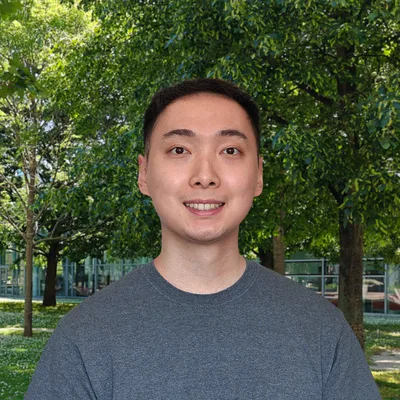
Episodic memory (EM) lets us rapidly encode and later retrieve information from a single exposure, yet how the brain uses EM to support cognition and what rational strategies exist for coordinating different systems of learning and memory remains unclear. To answer these questions, we use neural networks as model organisms to reverse-engineer the memory architecture of the human brain, and test their predictions with human behavioral and neuroimaging experiments.
Looking for: See lab website for the latest info.
To understand human language comprehension in the brain through computable, testable models. To develop reliable and useful language intelligence systems guided by brain-inspired principles and interpretability, with applications in education, healthcare, and accessibility.

We study how the brain uses rhythmic and temporal cues to make sense of complex sounds: how listeners segment speech and music into phrases, how they anticipate what comes next, and how the auditory-motor pathway supports both. We work with MEG, EEG, psychophysics and recurrent neural network models, and we are interested in what rhythm-based methods can offer speech and language disorders.
Looking for: PhD students, postdocs and research assistants interested in auditory neuroscience, music cognition or computational modelling

Research in my group aims at understanding dynamical behavior and function of neural circuits. Using theoretical and modeling approaches, in close collaboration with experimentalists, we investigate the neural mechanisms and computational principles of cognitive processes, such as decision-making (how we make a choice among multiple options) and working memory (how our brain holds and manipulates information "online" in the absence of sensory stimulation).
Although people often conceive of memory as something static and unchanging, like an old photograph, our memories constantly change because of subsequent experience and learning. Some of these effects result in interference and a reduced ability to retrieve memories, but some can improve memory retrieval, such as studying information again before a test. The research in our lab employs behavioral studies, neuroimaging (EEG and fMRI), machine learning, and computational modeling to explore how memory is dynamically strengthened, altered, and integrated, as well as the brain structures that support these processes.

Our research group operates at the intersection of artificial intelligence and the brain/life sciences. By leveraging techniques in artificial intelligence (AI), computer vision (CV), and computer graphics (CG), we develop solutions ranging from neuroscience foundation models to interactive visualization platforms.
Looking for: Postdoc, Ph.D., and intern
We study the cognitive and neural mechanisms underlying decision-making and how these processes are altered in behavioral addictions (e.g., problematic social media use).
Design game-based experiments and develop computational models to understand human decision-making and planning.
No labs match these filters.